

The evolution of scheduling in home health and hospice
Scheduling used to be administrative. Today, it defines operational performance.
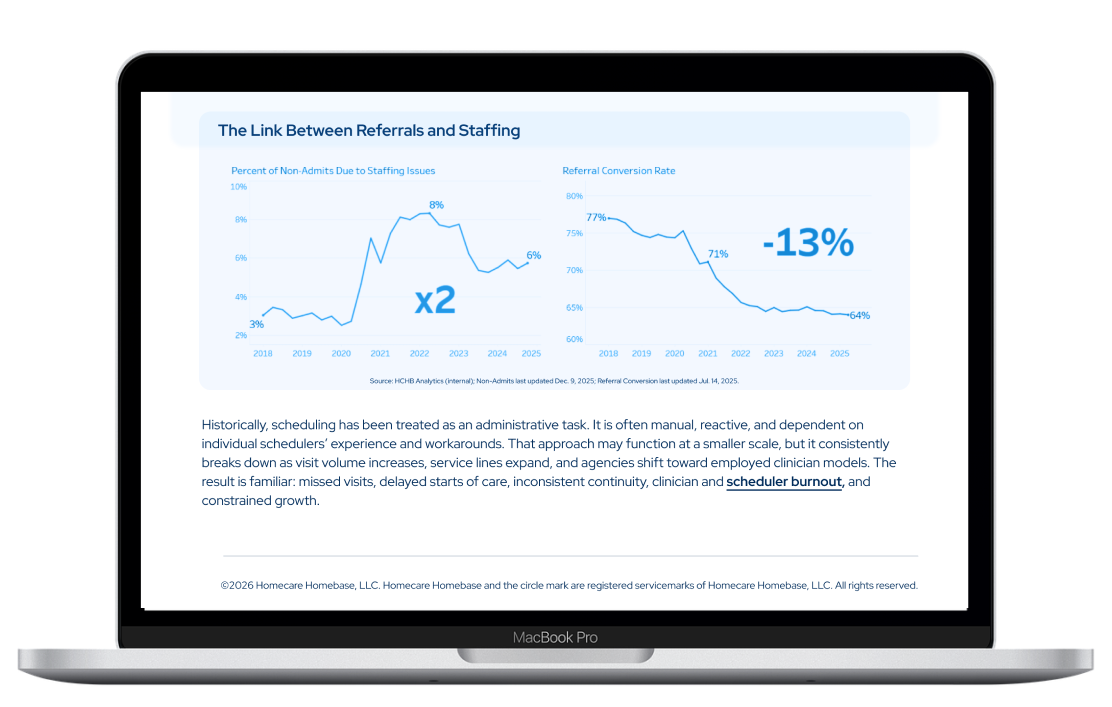
As workforce shortages persist and reimbursement pressure intensifies, agencies can no longer afford inefficient scheduling models. The way visits are scheduled now directly impacts clinical stability, margin protection, and scalable growth.
This educational report examines how scheduling evolved from manual coordination to a strategic operating system for home-based care.
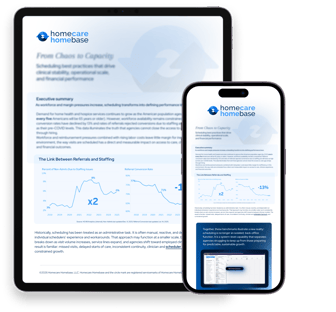
The pressure is real
The agencies that win in this environment treat scheduling as a system, not a task.
Why scheduling sits at the center of performance
When scheduling breaks down, the consequences ripple across the organization:

Delayed starts of care

Missed visits

Clinician burnout

Overtime and mileage leakage

Back-office strain
Constrained census growth
Learn how modernized scheduling helps unlock capacity.
Download the full report
Inside the report: Three lenses that define growth
Operational Scale without chaos
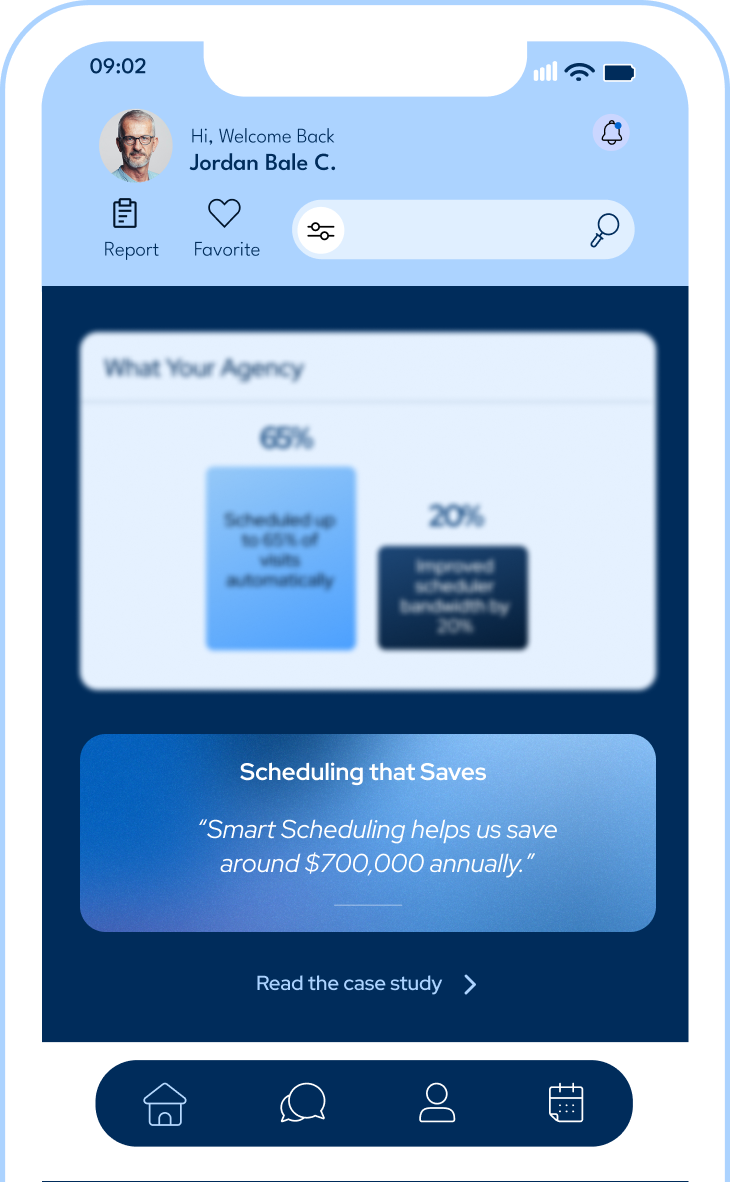
Up to 65% of visits can be scheduled automatically, freeing schedulers to manage by exception.
20% improvement in scheduler bandwidth without increasing headcount.
Agencies are embedding standardized rules into the system by enforcing skills, licensure, productivity targets, and geography consistently across branches.
Clinical: Stability that clinicians can trust
Visits scheduled
up to 22 days in advance
Improving predictability and continuity.
70% of visits scheduled via automation at scale
More than 2.2 million visits successfully automated in one enterprise environment.
When schedules are finalized earlier and built around clinical intent, agencies report:
Scheduling is now a clinician experience strategy.
Financial: Margin protection in action
$700,000 in annual savings reported by one multi-branch organization through smarter scheduling execution.
- Reduced overtime
- Lower mileage expense
- Improved clinician utilization
- Controlled administrative growth as census scales
Scheduling decisions directly affect labor, the largest expense category in home-based care. For CFOs and COOs alike, this is no longer a soft operational improvement. It is a measurable financial lever.
Download the full report
Designed for COOs, clinical leaders, and executive teams navigating census growth and margin pressure, this report provides a practical framework to assess scheduling maturity and uncover hidden capacity.
Download the report to see how leading organizations are turning scheduling into a scalable operating advantage.
Download the full report